


Editor’s Note
September gave the field three hearings. The FDA held its public hearing on the future therapeutic use of psychedelic drugs on the 14th, in a conference room in Silver Spring. The World Ayahuasca Forum convened in Girona from the 11th to the 13th, with Indigenous spiritual leaders setting the terms of the conversation rather than being invited into someone else’s. And, The Economist asked whether AI systems could become conscious.
None of these are container questions in the therapeutic-space sense we usually mean here. But they are all, in their own way, questions about who gets to be in the room, on what terms, and who decides.
Written comments on the FDA hearing are open until October 5th. Our own Awards finalists are announced October 13th. The conference is six weeks out. It’s a month for paying attention to thresholds.
Warmly,
— Alexandra
ART & DESIGN
• A Trip to Transformation by Xavier Rousset
A Trip to Transformation explores whether psilocybin’s greatest potential lies in prevention, not just in treating illness. Psilocybin doesn’t just need to be a last resort. Psychedelic medicine is being hailed as a breakthrough. But in a reactive system, access is limited and comes too late.
Refusing to accept this as the only future, filmmaker Xavier Rousset travels through Australia, Oregon and the Netherlands to discover how safe, proactive psilocybin access overseas is already changing lives.
Help finish the film and learn all about it here: triptotransform.com
RESEARCH & IDEAS
• Could AI become conscious? — The Economist
The Economist’s leader on machine consciousness doesn’t argue AI is conscious now. It argues that as AI systems get better at sounding like they have an inner life, our intuition that they’re “just machines” will get harder to sustain, whether or not anything is actually happening inside them. Pope Leo’s May encyclical drew a hard line: AI systems don’t feel joy or pain, full stop and plenty of people agree with him. But nearly one in five young American adults already report an “ongoing personal friendship” with a chatbot, and China has started stripping human-like traits out of its bots specifically to limit emotional dependence. The line is being tested.
The psychedelic field has spent decades arguing that consciousness is not a fixed, binary property and that it has gradients, that non-human minds (fungal, plant, animal) may have forms of awareness we’ve been too quick to rule out. The same generosity of definition that expanded our sense of who’s conscious is now being pointed at machines. It’s worth asking whether that’s the same move, or its opposite.
BUSINESS & POLICY
• The FDA hearing, and what's still open
The FDA’s hybrid hearing ran just under four hours on September 14th at White Oak, gathering perspectives on provider training, patient safety, access, and data standardisation for psychedelic drugs in supervised settings — explicitly not on individual drug applications, scheduling, or legalisation. Days before, senior FDA official Michael Davis published a framework paper in NEJM describing the agency as “meeting this moment” on hard-to-treat conditions. Industry framing at the hearing pushed toward normalisation: Definium Therapeutics’ CEO told Reuters regulators should treat psychedelics “like normal drug development, normal science, normal medicine,” resisting the idea that the category needs unusually special treatment.
Action Item: You can submit public feedback through the Federal Register Docket FDA-2026-N-7542 before the 11:59 p.m. ET deadline on October 5, 2026.
Read an overview of the proceedings from Psychiatric Times.
Review expert safety and access commentary via Reuters.
EVENTS AND CONVERSATIONS
• The World Ayahuasca Forum
Organised by the Yorenka Tasorentsi Institute, the Nixiwaka Institute, and ICEERS, the Forum billed itself as “not a conference in the usual sense” — five days of dialogue, music, dance, and visual art convened by Indigenous leaders including Benki Piyãko Ashaninka, Ninawa Pai da Mata, and Daiara Tukano, alongside researchers like Dennis McKenna and Monica Gagliano. The framing throughout was alliance: ancestral knowledge systems presented as something to be protected and learned from on their own terms, not folded into a Western wellness aesthetic.
For anyone designing spaces or programming around plant medicines, the Forum is worth studying less for its content than its structure.
Learn more here: ayahuasca2026.com
• TENSUHI, Oct 8, Polygon Portal, London, UK
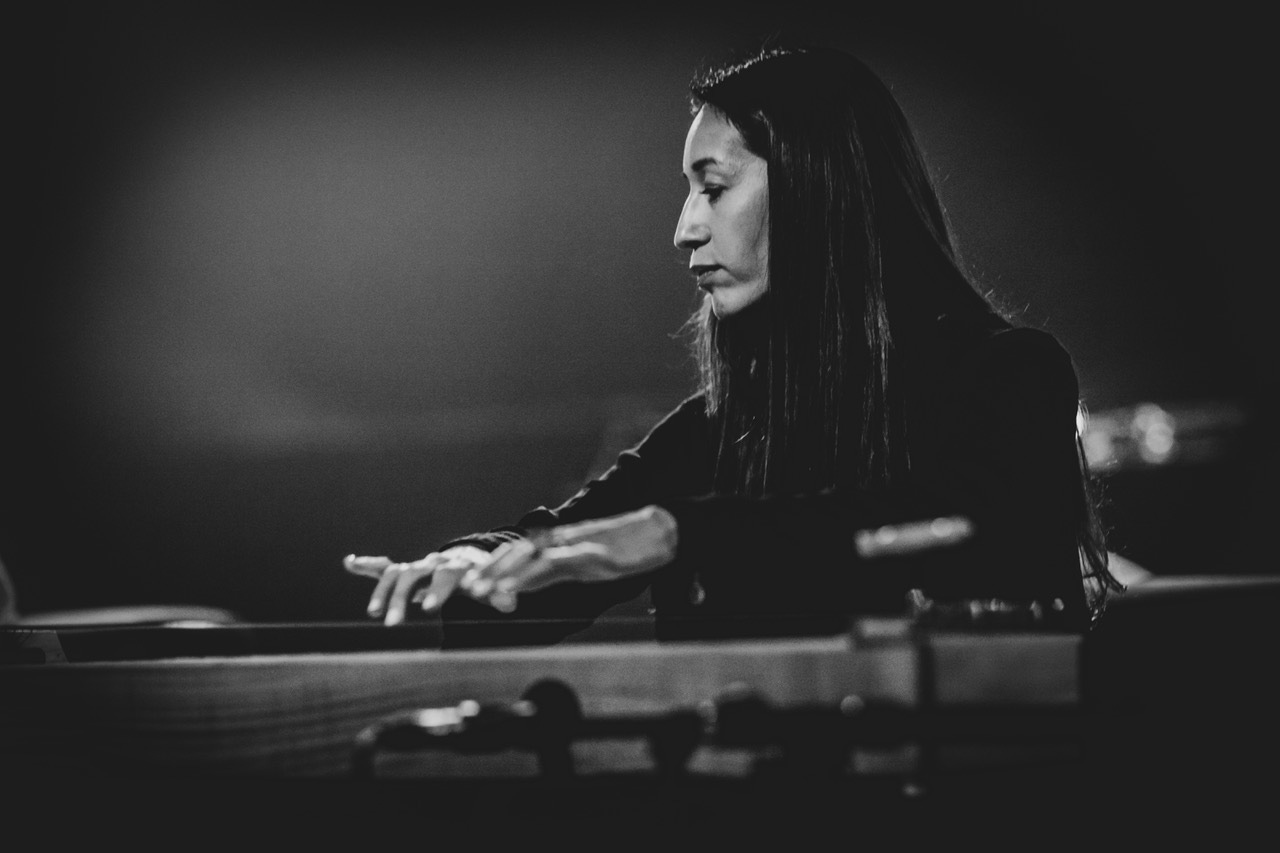
Judge of the music & audio category Tensuhi is back at Polygon Portal, bringing one of the most potent vocal practices into an extraordinary 360° spatial audio environment in the heart of Soho, London. Rooted in Japanese temple traditions, they will combine the power of the human voice with immersive, transcendental sound that moves around and through the body.
London people - you don’t wanna miss this. Reserve your spot here: polygon-productions.live/portal/wellness/elemental-resonance-live
• The ALPS Conference, Oct 9–10 | Aarau, Switzerland
Switzerland’s largest conference on evidence-based psychedelic science and mental health brings researchers, clinicians, and students together for two days of talks, panel discussions, and research — preceded by multilingual professional workshops. And we are excited to be a partner this year!
Programme & tickets: alpsconference.com
• States of Consciousness: Psychedelic Discovery and the Edge of Uncertainty Oct 14-15 | Berkeley, California, USA
States of Consciousness is a multi-day conference exploring uncertainty in the study of consciousness through the lens of psychedelic science. Hosted by the UC Berkeley Center for the Science of Psychedelics, States of Consciousness brings together researchers and practitioners across neuroscience, philosophy, journalism, ethics, and Indigenous studies to examine how different disciplines and knowledge systems approach questions of mind, consciousness, and psychedelics.

• Mushroom Jazz Halloween Edition, Oct 31 | Miami, USA
The godfather of downtempo Mark Farina and longtime touring partner Nutritious bring Mushroom Jazz to Miami for a 35th anniversary Halloween takeover, landing at open-air oasis ZeyZey with multi-instrumentalist Chuck Love along for the ride, spinning the funky, jazzy, blunted sound Farina invented back in the cassette-trading days, digging deep in the crates til late.
Doors swing at 6PM for the Miami Mushroom Meetup, where the myco-world’s founders, growers, and true believers gather before the beats take over, hosted by Mycopreneur, Phoenix Rising Psychedelic Speakeasy and Liquid Culture Records.
Get tickets now via zeyzeymiami.com

• Psychedelics Design 2026: Creative Biome, Nov 6-7 | Online
Two days where designers, researchers, artists, and advocates come together to explore what happens when psychedelic experience meets creative practice.
Expect honest conversations, unexpected perspectives, and a community that takes both the science and the culture seriously.
Tickets available via Eventbrite here
More information and full speaker line up here: psychedelics.design/2026-conference
NEWS FROM PSYCHEDELICS DESIGN
Awards judging has closed. Finalists across all nine categories are announced October 13th — watch this space.
Design Week magazine covered the upcoming event with a generous article this month!

Creative Biome, our 2026 conference, is November 6–7, online via Zoom, with sessions on ritual, indigenous knowledge and design, AI and integration (including the Lucy conversation above), and the awards ceremony itself on the 7th. Every session is available on replay for a month afterward, so nothing’s missed to a time zone.
The Huxley Club’s founding price is locked only through October 2026 — after that, the rate moves. If you’ve been meaning to join, this is the month.
The Symbiotic Cycle of Creativity — a the design-cycle model built out of this platform’s own practice, by Alexandra Plesner, mapping the “psychedelic threshold” inside a broader ego-to-symbiotic arc has now a settled name and a home on Zenodo (CC BY 4.0). It’s also the basis of a poster that will be presented at States of Consciousness: Psychedelic Discovery and the Edge of Uncertainty, Oct 14-15, 2026 at Clark Kerr Campus Conference Center University of California.
ON OUR READING PILE
A new regular section — what we're reading, what's sitting on the table, what doesn't fit neatly into any category but belongs here anyway. More books, films, articles, and resources we've curated with care over the past year live in our free resources library.
• The Psilocybin Handbook for Women — Jennifer Chesak
Re-reading currently The Psilocybin Handbook for Women is a resource for everyone, although it features information specific to those assigned female at birth—because psychedelics may have different effects and applications across the sexes.
• Tractor Beam
Tractor Beam is a quarterly speculative and science fiction publication dedicated to soilpunk: radical visions of hopeful futures on Earth.
• Thunder Perfect Mind
Thunder Perfect Mind is a print-only publication devoted to the Goddess, and inspired by psychedelics.
More book recommendations can be found in our resources library:
See you soon with the announcement of this year’s design awards finalists. ♡
“Every person’s body chemistry is different. The effect of one single drug that appeals to me might have a different effect on someone else. There’s no way to tell what the perfect psychedelic drug would be because it would be perfect for only you.”
Ann Shulgin
Know a designer, creative director, or agency working adjacent to this space? Forward this to one person who should be reading it.
It's becoming clear that with all the brain and consciousness theories out there, the proof will be in the pudding. By this I mean, can any particular theory be used to create a human adult level conscious machine. My bet is on the late Gerald Edelman's Extended Theory of Neuronal Group Selection. The lead group in robotics based on this theory is the Neurorobotics Lab at UC at Irvine. Dr. Edelman distinguished between primary consciousness, which came first in evolution, and that humans share with other conscious animals, and higher-order consciousness, which came to only humans with the acquisition of sophisticated language (especially math and logic). A machine with only primary consciousness will probably have to come first.
What I find special about the TNGS is the Darwin series of automata created at the Neurosciences Institute by Dr. Edelman and his colleagues in the 1990's and 2000's. These machines perform in the real world, not in a restricted simulated world, and display convincing physical behavior indicative of higher psychological functions necessary for consciousness, such as perceptual categorization, memory, and learning. They are based on realistic models of the parts of the biological brain that the theory claims subserve these functions. The extended TNGS allows for the emergence of consciousness based only on further evolutionary development of the brain areas responsible for these functions, in a parsimonious way. No other research I've encountered is anywhere near as convincing.
I post because on almost every video and article about the brain and consciousness that I encounter, the attitude seems to be that we still know next to nothing about how the brain and consciousness work; that there's lots of data but no unifying theory. I believe the extended TNGS is that theory. My motivation is to keep that theory in front of the public. And obviously, I consider it the route to a truly conscious machine, primary and higher-order.
My advice to people who want to create a conscious machine is to seriously ground themselves in the extended TNGS and the Darwin automata first, and proceed from there, by applying to Jeff Krichmar's lab at UC Irvine, possibly. Dr. Edelman's roadmap to a conscious machine is at https://arxiv.org/abs/2105.10461, and here is a video of Jeff Krichmar talking about some of the Darwin automata, https://www.youtube.com/watch?v=J7Uh9phc1Ow